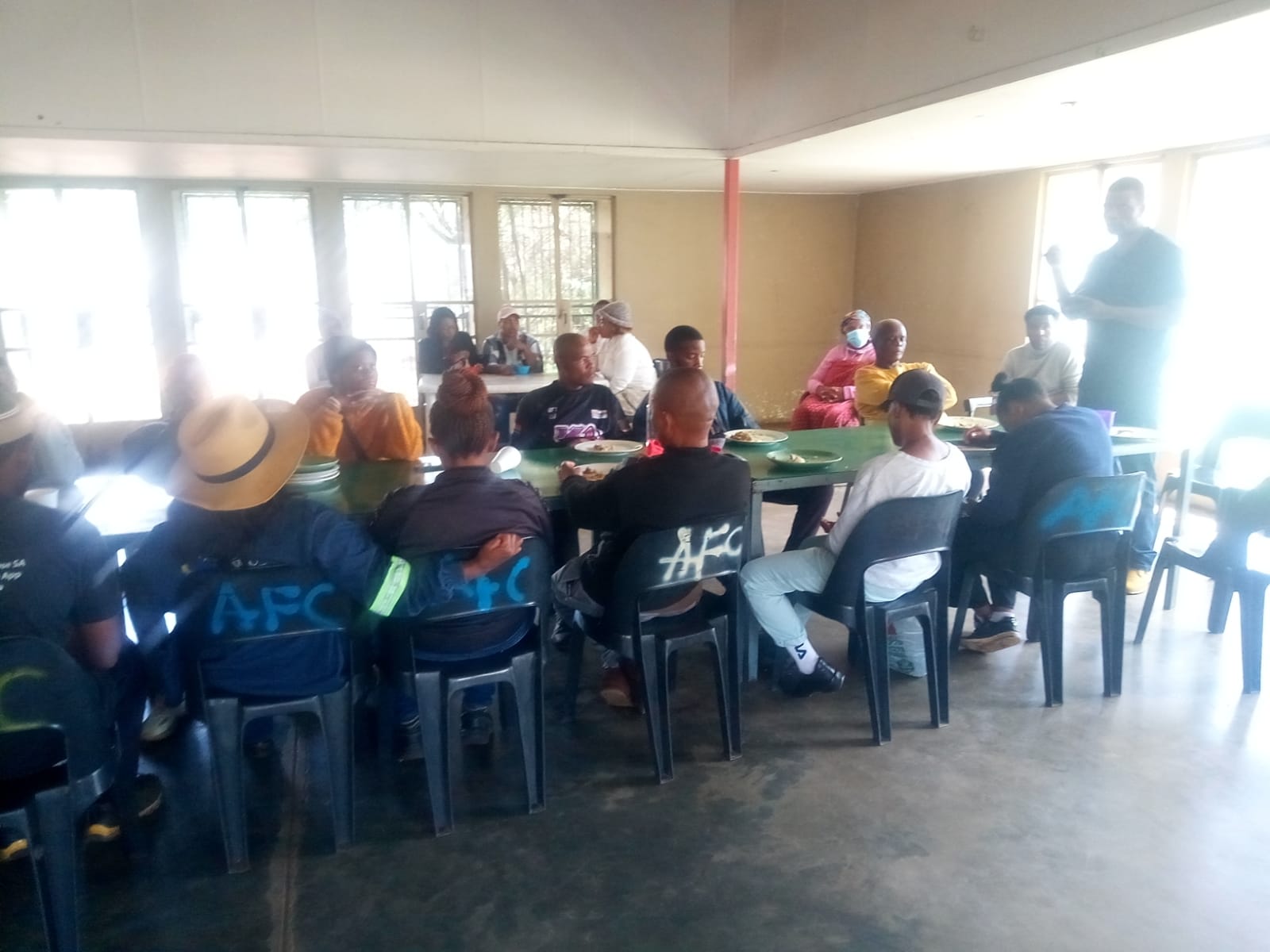

Imbizo ya Madoda was never designed as a once-off event. From the beginning, the plan was clear: start with two major gatherings to set the foundation, and then move into smaller Brotherly Pods as the implementation arm. The first of these anchor gatherings took place on 27 October 2025 at 10:00, at the Katlehong Resource Centre, under the theme Identity. Men and women, youth and adults sat together, not by accident, but as part of a deliberate strategy: confront the questions of identity in community, and then carry the work forward in smaller, accountable groups.
In this session, the pastor reminded everyone that identity is not invented from scratch. We draw our identity from God, and when men drift from that reference point, families and communities feel the impact. He spoke about fatherlessness as a deep fault line in our society and described how many men live with an “untamed boy” inside them. If that inner boy is never disciplined and healed, you do not get a mature man; you get a childish older body with no stable centre, regardless of age. That is when leadership becomes noisy but hollow. People step into positions and titles but not into real leadership, because they lack a true model of servant-hearted responsibility.
Using examples close to home, the pastor pointed to how leadership can look in South Africa’s parliament – like a noisy crèche where everyone talks and demands their way, while the spirit of servanthood is largely absent. With some humour, he added a sharp observation: “Most problems are caused by men; every war was started by men. If women were in charge, you’d only have countries not talking to each other.” The room laughed, but the point stood. Men carry a heavy share of responsibility for the chaos in the world, and avoiding that truth doesn’t help anyone. The session grounded this responsibility not in shame but in calling: men need God as the foundation and reference for true identity and leadership.
Because the Imbizo framework was intentionally designed, the session did not end at talk. Everyone left with clear homework: “Who am I? What is my purpose in life? Where am I going?” These questions form part of the internal journey that the Imbizo tracks over time, and they also serve as a baseline for future Brotherly Pods. The idea is simple but structured: the big gatherings introduce the core themes, and the Brotherly Pods then help men live those themes out in smaller circles, week by week. This first identity gathering therefore marks the start of a longer, planned process, not an isolated event.
The next step flowing from this foundation is deliberately practical. At the following gathering on 18 November 2025, participants will clean the Katlehong Resource Centre together. The pastor made it clear that waiting for rescue is not an option. “No one is coming to rescue us,” he said. “We have the same capacity as those in leadership or government posts to do something about our situation. We have to take ownership of our environment, our surroundings, and so on.” The clean-up is part of the original Imbizo roadmap: move from identity on paper to identity in practice, starting with the space where they meet.
Looking ahead, the team has already built the next layer of the plan: as attendance grows and the Brotherly Pods strengthen, Imbizo ya Madoda will launch a broader “Make Katlehong Clean” campaign next year. In other words, these early sessions are both ministry and baseline, they show where the journey starts: a specific date, a specific place, a clear theme, and clear next actions. For the public, this looks like a story about men rediscovering who they are and taking responsibility for their surroundings. For those monitoring the work over time, it is also a first marker in a longer process: from big Imbizo gatherings, to Brotherly Pods, to visible change in Katlehong’s streets and homes.