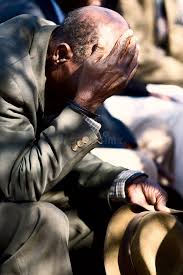

Imbizo ya Madoda is slowly taking root beyond its initial gatherings, and one of the clearest signs of this is what happened at a recent Brotherly Pod meeting in Siluma View, Katlehong. This was not a mixed crowd. It was a room of about fifteen men, all 40 years and older, coming together without fanfare but with a very specific mood: tired of watching their communities decay, and ready to talk honestly about what has gone wrong and what must change.
From the start, the pastor did not soften the message. He spoke at length about the responsibility men carry for the state of their communities, and why government alone cannot rescue anyone. In a country where high crime, substance abuse, and weak social cohesion remain serious concerns, community-led responses are increasingly recognised as essential alongside formal state action. He used that reality to frame the vision of Imbizo ya Madoda: to help build communities that are peaceful, prosperous, and safe, starting with the men themselves. The focus was not on blaming outsiders but on asking what kind of men these neighbourhoods are producing and rewarding.
A theme that kept resurfacing was honour and respect. These are older men, formed in a world where “it takes a village to raise a child” was not just a slogan but a lived practice. They spoke with frustration about how difficult it has become to discipline or guide children in public without backlash, and about how some of the younger generation behave openly in ways they feel disregard elders and community norms. There was also a strong sense of pain around how men see their current standing in society: some participants felt that many men no longer experience respect in their own homes or relationships, especially in an era where economic roles and gender expectations have shifted. Others raised serious concerns about the level of crime among boys and young men in the area, acknowledging that repeated punishment and even beatings have not brought real change. The conclusion, voiced from the floor and reinforced by the pastor, was that behavioural control without inner change is not enough.
At that point, the pastor brought the conversation to a deeper layer: the heart. He emphasised that without a genuine change of heart, no amount of external discipline, community scolding, or tough talk will transform a man. This is where he located the core purpose of Imbizo ya Madoda. It is not primarily a behaviour-policing project; it is a heart-and-identity formation project. To explain the structure behind that, he introduced the EH–MH model: Eyes, Heart, Mind, and Hands. He explained that the Eyes have to do with vision – a man’s God-given picture of where his life, family, and community should be going, not just what he sees in front of him. The Heart speaks to healing and transformation on the inside. The Mind deals with how a man thinks about himself, responsibility, work, and manhood. The Hands are about action – the practical service, work, and contribution that flow out of a renewed inner life.
The pastor made it clear that EH–MH is not a Western import or a feel-good motivational model, but a contextually developed, Afro-conscious and trauma-informed approach. It takes seriously the lived experience of black South African men, including historic and current trauma, while refusing to let pain become identity or destiny. It is sequential and holistic: you don’t rush straight to productivity and “grind culture” without doing the slow inner work. In his words, the man who is ready to work must first become the man who is ready to live, with direction, dignity, and discipline.
As the meeting went on and more men arrived, the atmosphere stayed warm but serious. Latecomers quickly picked up the energy in the room; several expressed that it felt like “finally, men are standing up” and that “enough is enough”. There was a sense of anticipated release, a kind of catharsis waiting to happen as men realised that this was not another aimless gathering, but part of a larger, thought-through movement. One participant raised an important caution: they must be ready for challenges. Many organisations in the past had started with good intentions and then disappeared because there was no clear direction or structure. This comment actually confirmed why Imbizo ya Madoda has been built with a layered design: large gatherings to set the vision, Brotherly Pods to walk it out in smaller units, and a clear framework (EH–MH) to keep the work focused and measurable over time.
By the end of the evening, no formal date had been set for the next Siluma View Brotherly Pod, but the commitment was clear: they will meet again soon. For public eyes, this looks like a simple community men’s meeting. For those tracking the work more closely, it is also a key data point: a group of around fifteen older men in Siluma View, Katlehong, engaging seriously with issues of responsibility, respect, crime, and inner transformation, under the Imbizo ya Madoda banner, and being introduced to the EH–MH model that will guide their journey. It marks another step in a planned process: from big vision to local pods, from frustration to ownership, and from talking about what is wrong “out there” to asking, together, what kind of men must we become for our communities to be peaceful, prosperous, and safe?